
History: Artist Agnes Pelton found her light in 1930s Cathedral City
Tracy Conrad Special to The Desert Sun, Original Article link
Updated Sept. 15, 2024, 7:48 a.m. This article originally appeared in the The Desert Sun and is reproduced here with full credit to the original writers and publication.
Writing in the Cathedral City News in November 1949 Mrs. Paul W. Clark noted, “It seems to this writer that the kindly, calm and serene face of Miss Agnes Pelton reflects the years of her life and work in the desert she so loves to depict. She has lived in the desert in Cathedral City for 17 years, not leaving except for a few days at a time, even in the extreme heat of our summer months. In her own words, ‘the illusive effects of light and sense of space, the warm light and glow of early mornings and late afternoons are best found in summer. In the hot, dry atmosphere of the summer season it is possible to best secure the pure color of the desert.’”
Peripatetic Pelton had literally crisscrossed the globe before settling on the desert in the small outpost of Cathedral City. Hardly on the map, and only aspirational in calling itself a “city,” the spot was near Palm Springs, which wasn’t much known yet either. Pelton was born far away from the California desert, in Stuttgart, Germany to American parents. She lived in the Netherlands and Switzerland before returning home to Brooklyn with her mother after her father’s death. Pelton studied landscape painting at the Pratt Institute in Brooklyn. Her instructor introduced her to non-realistic and imaginative painting. A year in Italy studying Italian painters and life drawing at the British Academy in Rome made Pelton an accomplished artist.
She was invited to exhibit at the prestigious 1913 Armory Show in New York, a seminal moment in modern art. The modernist movement was exploring abstraction as the essence of painting. Pelton had learned from Japanese prints venerated by her instructors at the Pratt Institute, and was incorporating imagination, light, and philosophical interests of her time into her work.
In search of the light, she traveled as far as Beirut and Hawaii. Experimenting in abstraction she began visiting Taos, New Mexico where she found an extreme desert landscape and a group of avant-garde fellow artists, who became known as the Transcendental Group, and she also began an intense interest in Agni Yoga, an esoteric off-shoot of Theosophy devoted to fire.
From 1911 through 1936, Pelton had 14 solo exhibitions and was included in 20 group exhibitions in the United States and abroad. Her contemporary and compatriot, Georgia O’Keefe would become wildly famous through her association with George Steiglitz. Pelton, never known to be involved with a man, moved to obscurity, living in Cathedral City for the rest of her life.
Both O’Keefe and Pelton first came to the New Mexico desert at the invitation of Mabel Dodge Luhan, Taos’ wealthy and influential art patron. The desert landscape was critical to the work of both. O’Keefe would go back to New York, as Pelton went further west.
Like many artists and free thinkers, Pelton found the desert had a magical appeal, “The vibration of this light, the spaciousness of these skies enthralled me. I knew there was a spirit in nature as in everything else, but here in the desert it was an especially bright spirit.”
On her arrival, she found a population of just 100 people. Far from civilization and on the fringe in many respects, including now geographically, Pelton was a believer in numerology, astrology, faith healing and meditation. Like many female intellectuals and artists of the time, her single status made for speculation about sexual preference, or disappointment in love, or just avid pursuit of her occupation in a society that expected only devotion to marriage and family.
Pelton “built her own home here in combination with an adequate studio both for her work and also to display her paintings. In her large front yard overlooking the desert she has retained the natural desert vegetation. In the shaded patio immediately adjoining the house she has many native and subtropical tree plantings. These are combined so as to give a variety of ‘leaf interest’ as Miss Pelton calls it. The needle-like growth of the desert mingles with the broader leaves of subtropicals.
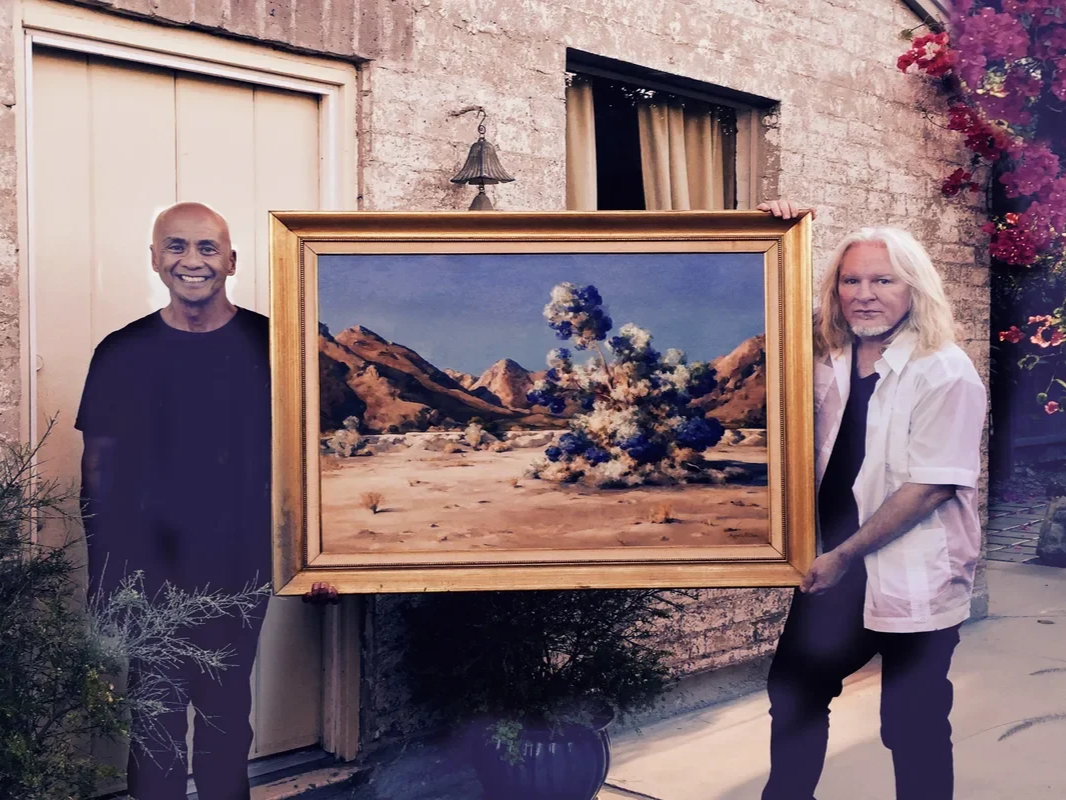
Simeon Den left and Peter Palladino right hold Agnes Peltons original painting Smoke Tree In Bloom. Oil on canvas, 30 x 40 inches.
Miss Pelton is a master painter of desert trees. Paintings of ancient desert willow in bloom, of smoke trees in their full brilliant summer coloring and the yellow springtime of the Palos Verdes (sic) are now on display…. Two of her better-known paintings are now on loan to the Desert Museum. During the war years an exhibition of Miss Pelton’s paintings was on tour under the auspices of the Western Association of Art Museum directors. They were exhibited at Crocker Art Gallery, Sacramento and San Francisco Museum of Art in the civic center, at the Santa Barbara Museum of Art, at Pomona College and the Fine Arts Gallery in Balboa Park, San Diego.”
“Miss Pelton does not make a practice of displaying her work all over the country. She believes that desert paintings are best seen in their proper setting—the desert. Therefore a complete selection of her work can be seen only at her studio where she holds open house on Sunday afternoons.”
Every Sunday, Pelton opened her home and studio to interested neighbors and visitors. Her guest book is available to view online as part of the Smithsonian's Agnes Pelton papers.
Pelton was profiled in the Desert Magazine by the Cathedral City resident June Day, daughter of Harriet Day, her next door neighbor who for years managed the Desert Inn Art Gallery in Palm Springs: “Miss Pelton is one of those artists who has captured the true atmosphere of the desert. In her paintings one can feel the heat, the baked dry earth, the clean crispness of the early morning air. As a personality she has that rare gift of inspiring those around her with greater interest and effort in the accomplishment of worthwhile tasks.”
Cathedral City in 1930s was a little place but offered Pelton a big, welcoming embrace. Pelton said of the California desert, “This place has taken me in, accepted me.” She repaid that acceptance with a deep involvement in the community. Pelton was a prime mover in the establishment of the Desert Art Center. Her painting of a blooming smoke tree was auctioned to initiate support for the fledging concern. Today Pelton paintings regularly are sold for prices that would seem unimaginable back when. Her dreamscapes regularly make hundreds of thousands and even millions of dollars.
On the desert and practically on the edge of the world, Pelton painted both realistic desert landscapes as well as transcendental abstractions. Seemingly irreconcilable, the abstract paintings were personal and essential to her spirit and the landscape works celebrated the desert itself and earned her a modest living and a rich spiritual life; a combination imaginable only in the desert.
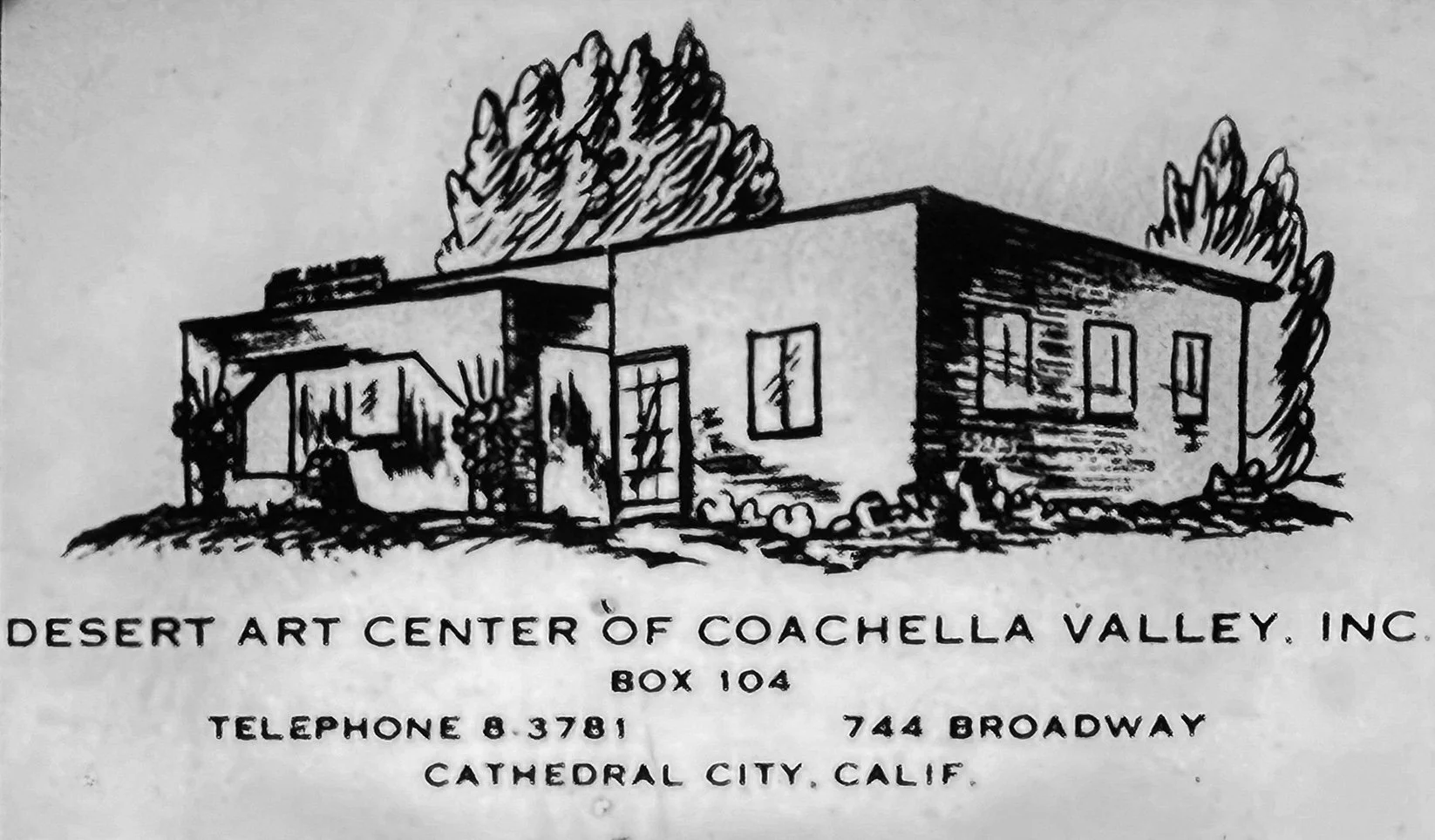
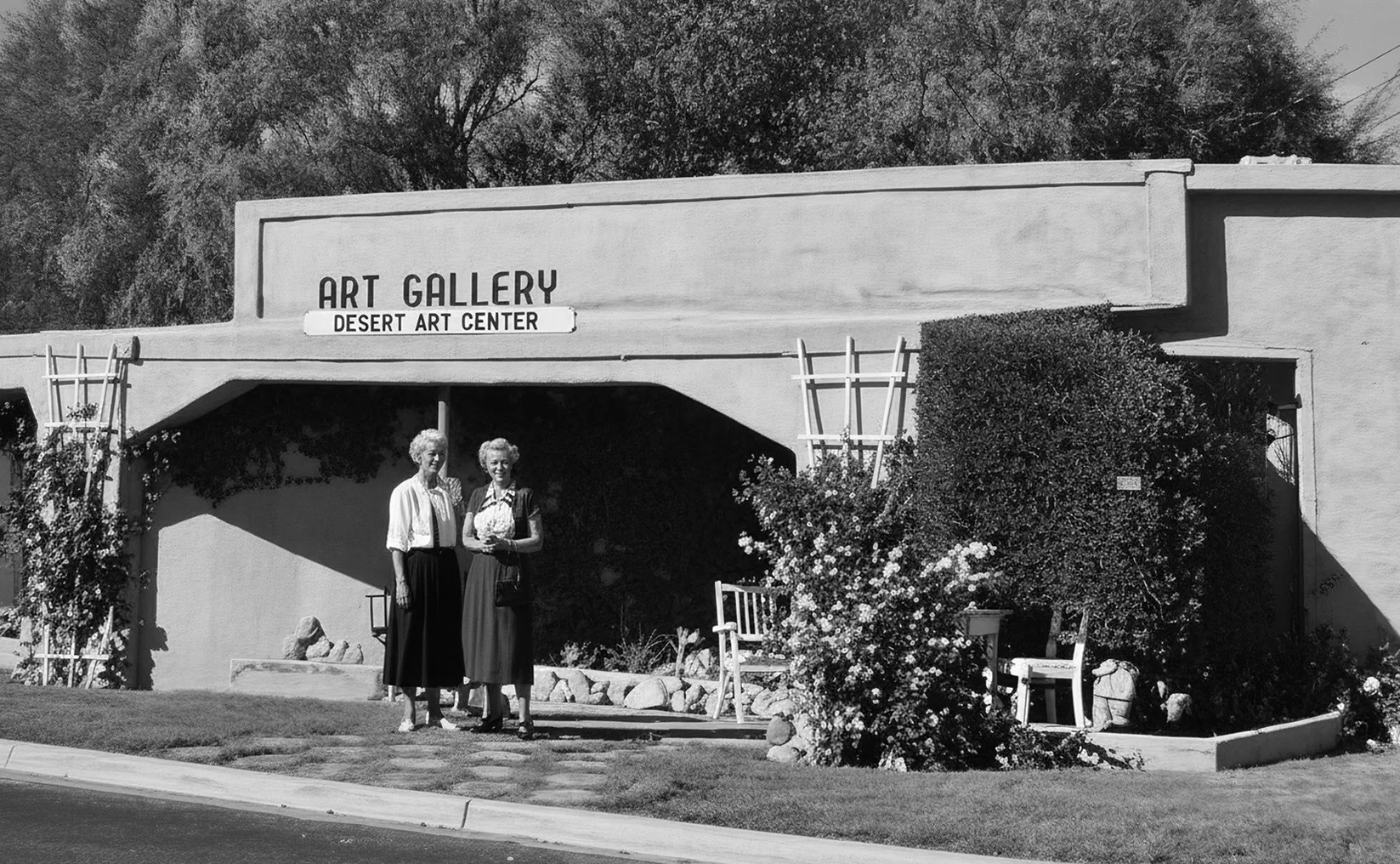
Today, Sunday Sept. 15, the painting that started the Desert Art Center will be on display from 10 a.m. until noon at the historic residence where Pelton graciously welcomed visitors. This modern “Come & Go Open House” is a unique opportunity to immerse yourself in hyper-local art history. Cartoonist and painter Jimmy Swinerton and Cabot Yerxa, the artist builder in Desert Hot Springs were visitors. Boy scout Bob Hillery, who would grow up to be the first elected mayor of Cathedral City, was a regular around the Pelton house. Remarkably, heiress and art patron Mabel Dodge Luhan even visited.
The community is invited to drop by the Agnes Pelton House at 68-680 F Street in Cathedral City, like so many did, every Sunday, in years past. To Learn more visit www.agnespeltonsociety.com and DiscoverCathedralCity.com.
Tracy Conrad is president of the Palm Springs Historical Society. The Thanks for the Memories column appears Sundays in The Desert Sun. Write to her at pshstracy@gmail.com.